

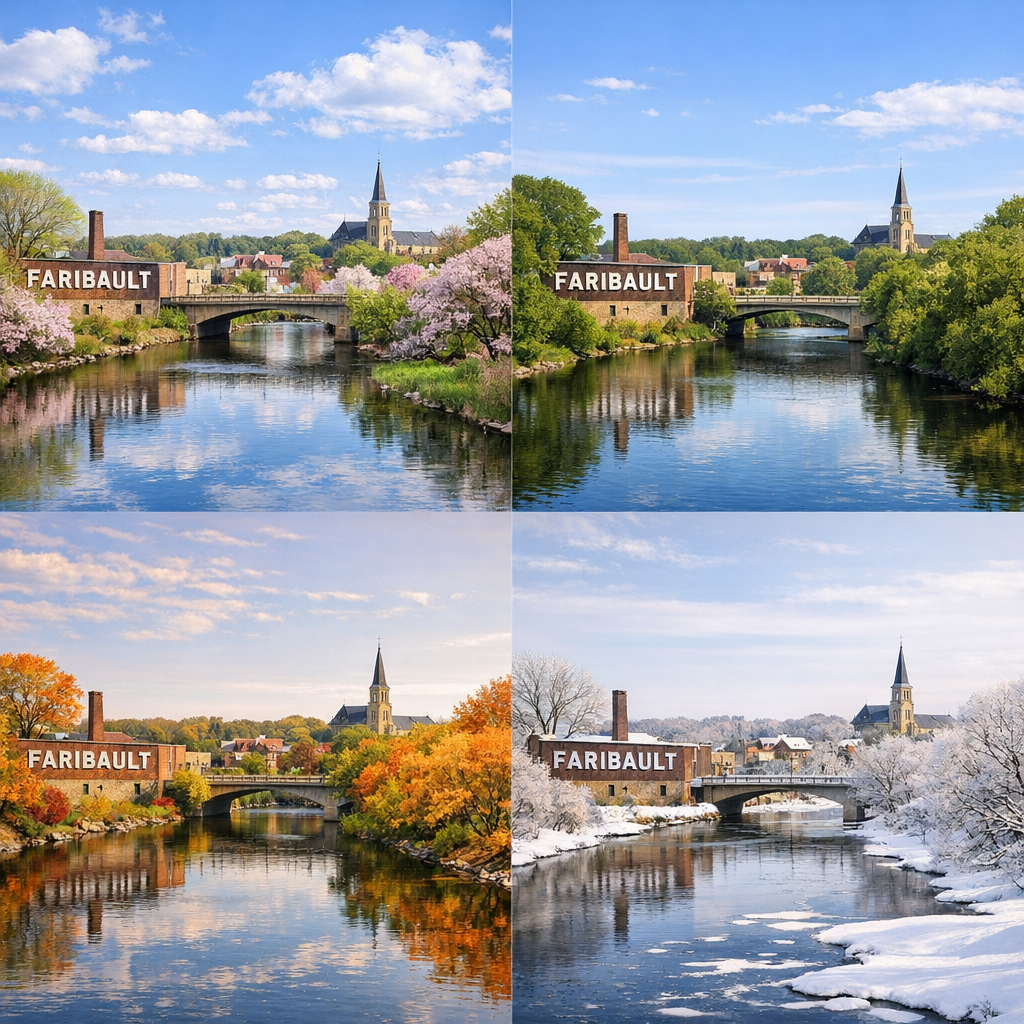
Faribault, Minnesota, experiences a diverse range of weather conditions throughout the year, characterized by distinct seasonal changes. Understanding these patterns is essential for residents and visitors alike.
Seasonal Temperature Variations
Faribault’s climate features significant temperature fluctuations between seasons. Winters are typically cold and snowy, with average low temperatures around 8°F and highs near 23°F in January. Summers, on the other hand, are warm and humid, with July averages reaching highs of 82°F and lows of 62°F. These variations are typical of a humid continental climate, where summers are warm and winters are cold.
Precipitation and Weather Events
Precipitation in Faribault is distributed throughout the year, with the summer months of June through August receiving the highest amounts. June, for instance, averages about 3.5 inches of rainfall. Thunderstorms are common during these months, contributing to the higher precipitation levels. Winter months see less precipitation, but snowfall is frequent, adding to the region’s seasonal character.
Environmental Considerations
Faribault’s location at the confluence of the Cannon and Straight Rivers influences its environmental landscape. The city has implemented measures to manage stormwater effectively, maintaining sewer mains, gutters, and detention ponds to ensure proper operation. Additionally, the presence of wetlands and wooded areas, such as those surrounding the Faribault Energy Park, highlights the community’s commitment to environmental stewardship.
Understanding Faribault’s climate and environmental initiatives helps residents and visitors appreciate the city’s natural beauty and prepare for the varying weather conditions throughout the year.