
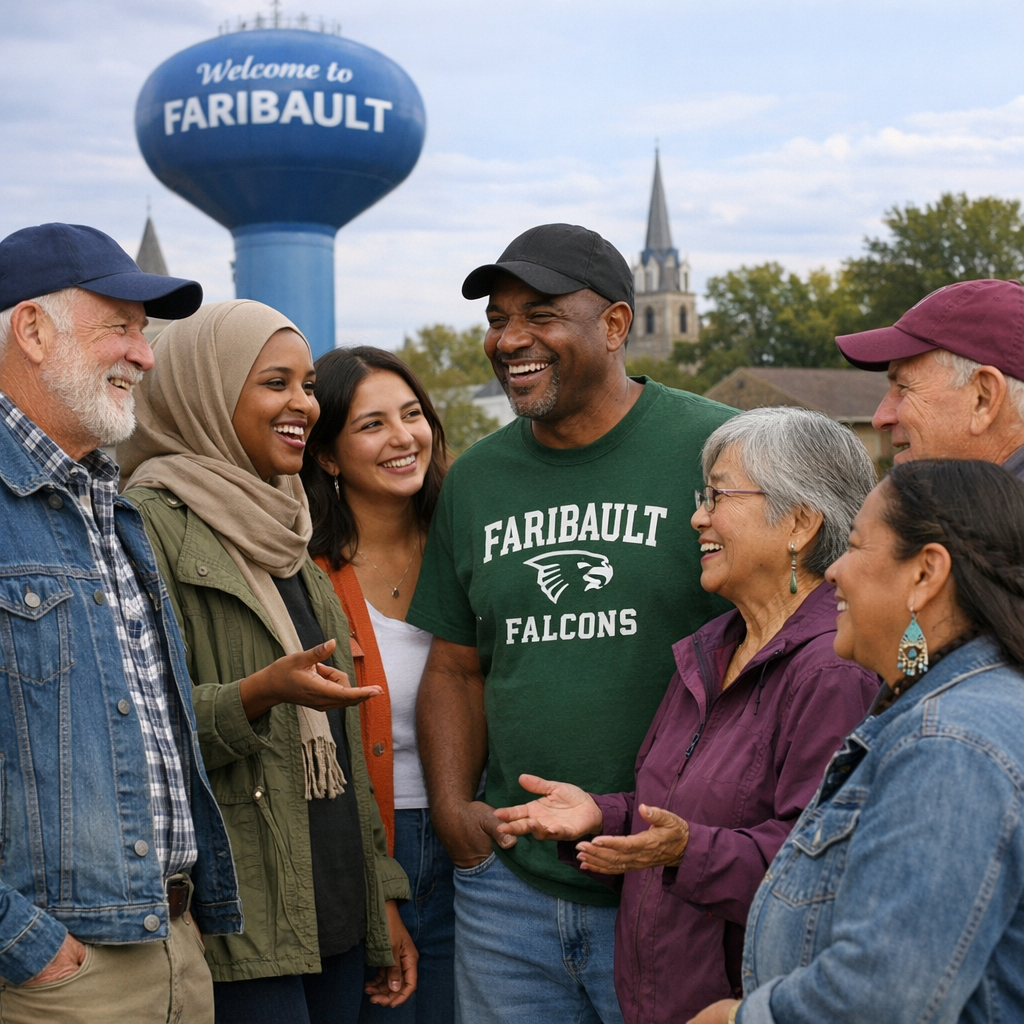
As a native of Faribault now covering “Community Voices,” I’ve spent the past year hearing many strong stories: immigrant parents worrying about school support; renters desperate for stable housing; youth wondering where to belong. These aren’t isolated cases—they reflect ongoing gaps in how we’re heard, how we act, and how our city evolves.
Immigrant families seeking language, culture, support
Faribault has grown more culturally diverse in recent years. Compared to many places in Minnesota, our community has a sizable share of people born abroad, and a higher percentage who do not speak English fluently. These demographic realities bring great vitality—flavors, festivals, fresh perspectives—but also friction when institutions do not adapt. ESL programs, religious accommodations, and culturally responsive mentorship are not luxury add-ons. They determine whether children succeed, whether parents feel welcomed, and whether people with different backgrounds believe they belong.
Barriers still remain
Stories from Somali and other immigrant families show school staff sometimes undercut success by misunderstanding cultural context. Comments from listening sessions include concerns about academic support, mentors who look like the students, and even regular transportation during winter. Addressing these concerns would cost effort, coordination, and funding—but overlooking them costs more: missed potential, alienation, and separation.
Rent, housing, affordability
Affordable housing is one of the loudest recurring themes in city feedback. Even with new apartment buildings, Faribault’s vacancy rate remains below the level many experts believe is healthy; that means fewer choices for renters and rising pressure on prices. For many families—immigrant, low-income, working-class—housing instability isn’t theoretical. It’s a daily risk.
Community infrastructure and urgency
Water service line replacements, for example, have uncovered elevated lead levels in some privately owned homes. That’s a serious public health issue, especially for children. When infrastructure upkeep falls behind or resources are unevenly deployed, it tends to hit those already under-resourced hardest. It’s not just about pipes—it’s about equity.
Why every voice matters—and how to lift them
When public feedback processes assume everyone speaks English well or has flexible hours or reliable internet access, many don’t participate. That means city planning, school strategies, or public health initiatives miss crucial input. If we want decisions that fairly reflect our community, we need to redesign the outreach: flexible meeting times, translation services, trusted community pathways for input, youth-led forums.
Faribault already has many of the pieces in place—strong park systems, good emergency services, passionate nonprofit efforts. But proximity isn’t enough. What will make the difference is connecting across lines of language, background, income, and generation—loving our strong parts, acknowledging sore spots, and tying them together in shared purpose.
When everyone is heard, Faribault grows stronger. When some voices stay silent, the rest of us miss out. Let’s make the effort so that our next chapter is as inclusive as the people who live here.